
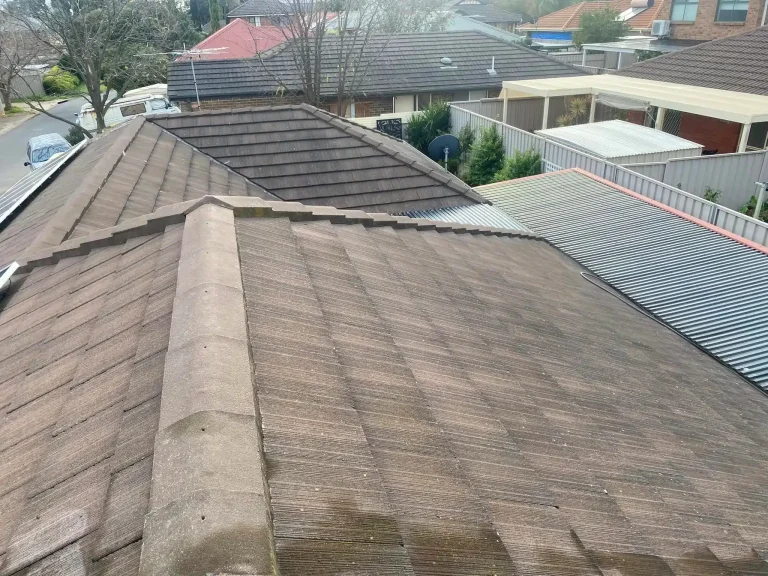
Adelaide’s weather doesn’t give roofs much of a break. Scorching summers, sudden winter storms, and temperature swings that go from 38 degrees one day to 12 the next – it’s a relentless cycle, and slacking off on roof maintenance here isn’t something you can afford. The problem is that most roof damage doesn’t announce itself. It builds quietly, behind tiles and under flashings, until something small becomes something far harder to ignore.
Here are five repairs Adelaide homeowners commonly delay – and what they turn into when left alone.
One cracked tile looks minor. It usually is – at first. But water doesn’t need a wide gap to find its way in. It seeps under surrounding tiles, works into the sarking and insulation below, and sits there between storms. By the time a stain shows up on your ceiling, the moisture has typically been building for weeks or months. What could have been a straightforward tile swap turns into saturated insulation, potential mould, and ceiling repairs that cost far more than the tile ever would have.
A loose or missing screw on a metal roof isn’t trivial. The exposed hole lets moisture in, and once water gets under the protective coating, rust starts forming at the base of the fastener and spreads outward. Adelaide’s summer heat accelerates this – coatings break down faster here than in milder climates. The cost difference between catching it early and leaving it is significant.
Flashing is the metal that seals the joints where your roof meets walls, vents, and valleys. Most homeowners barely know it’s there – until it fails. A section of cracked or lifted flashing is one of the most common causes of roof leaks in Adelaide, and also one of the most ignored. Because it’s not visible from the ground, it rarely feels urgent. Valley flashing in particular channels a large volume of water during heavy rain. When it lifts, that water goes straight into the roof cavity – quietly and consistently, every time it rains.
Roof valleys – the channels where two roof slopes meet – collect everything: leaves, bark, grit, moss. A partially blocked valley doesn’t drain properly, so water pools and backs up under the tiles at the edges. Unlike a blocked gutter, you won’t see it overflowing from the ground. The damage happens out of sight, and the first sign is usually a leak that appears to come from nowhere. Clearing a valley during a regular clean is a quick job. Repairing the damage from a neglected one is not.
Australian home insurance policies cover sudden storm damage – but not damage that resulted from pre-existing neglect. If an assessor finds your roof already had unrepaired cracked tiles, lifted flashing, or deteriorated pointing before the storm hit, your insurer can reduce or deny the claim. The storm becomes the trigger, not the cause – and that’s a distinction that matters. Keeping your roof in reasonable repair isn’t just about preventing leaks. It protects your ability to claim when something serious happens.
At Master Roofing Adelaide, we see it every week – repairs that would have taken an hour or two turning into full-day jobs because they sat untouched through one too many storms. A free inspection tells you exactly where your roof stands.
Call us on 0420 580 897 or book online. We’ll tell you what needs attention now and what can wait – no upselling, no guesswork.