Adelaide is a city of stunning contrasts – from the scorching, dry heat of a February afternoon to those sudden, lashing winter storms that roll in off the Gulf St Vincent. While we love our Mediterranean climate, our homes often tell a different story. Specifically, our roofs.
We spend our days atop the ridges and valleys of South Australian homes. If there’s one thing we’ve learned, it’s that Adelaide is uniquely ‘talented’ at causing roof leaks. If you’ve noticed a damp patch on the ceiling or a mysterious drip in the garage, you aren’t alone. Here is why our local climate is the perfect storm for roofing headaches.
1. The Accordion Effect: Thermal Expansion
In Adelaide, it’s not unusual to have a 40°C day followed by a rapid cool-down. This extreme temperature fluctuation causes your roofing materials to expand and contract rapidly.
Over time, this ‘breathing’ causes:
- Mortar to crack: The bedding and pointing under your ridge caps become brittle and break away.
- Tile movement: Tiles can shift just enough to create a gap for water to enter during the next downpour.
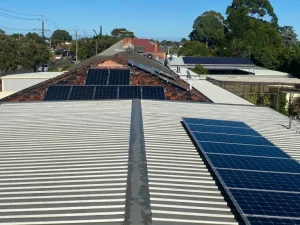
- Metal fatigue: On tin roofs, screws can back out as the metal moves, leaving “bolt holes” open to the elements.
2. The Porous Nature of Old Terracotta
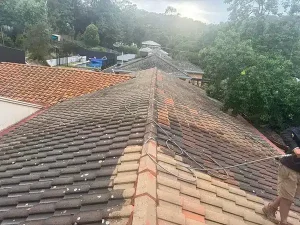
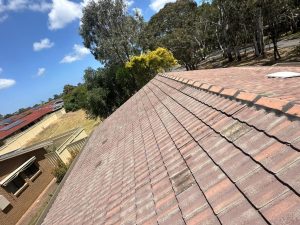
We love the vintage charm of terracotta. But as these tiles age in the Adelaide sun, they lose their glazed protection. They become like giant orange sponges. During a sustained wet week in July, a porous tile can soak up water until it’s saturated. Once it can’t hold any more, that moisture begins to seep onto your timber batten and eventually your ceiling.
3. The Silent Killer: Lichen and Moss
Walk down any street in Unley or Prospect, and you’ll see roofs covered in green and gold growth. While it might look established, lichen is a major cause of leaks.
- Water Damming: Moss buildup acts as a mini-dam, forcing rainwater to flow sideways or upward under the tiles instead of down into the gutters.
- Root Penetration: Lichen actually eats into the surface of your tiles, creating micro-cracks that turn into major leaks during a storm.
4. Clogged Gutters and Valley Blockages
Adelaide’s leafy suburbs are beautiful, but gum trees are notorious for dropping debris year-round. When your valleys (the metal channels where two roof planes meet) get clogged with leaves, the water has nowhere to go. It backs up, goes over the internal flashing, and ends up in your roof cavity.
Common Red Flags for Adelaide Homeowners
Don’t wait for a puddle on the carpet. Keep an eye out for these subtle signs:
- Dark spots on the underside of your eaves
- Bubbling paint on the ceiling or top of the walls
- Debris in the gutters (pieces of broken mortar or tile “grit”)
- A musty smell in the ceiling space after rain
Prevention is Better (and Cheaper) Than a Patch-Up
A roof leak rarely stays small. What starts as a hairline crack in a ridge cap can turn into a collapsed ceiling if caught during a heavy winter front.
In Adelaide’s harsh conditions, a professional roof inspection is your best line of defence. At Master Roof Restoration, we don’t just ‘plug holes’. We look at the structural integrity of your bedding, the porosity of your tiles, and the health of your drainage system to ensure your home stays dry through every season.
So, is your roof ready for the next Adelaide storm? Don’t wait for the drip. Let’s get an expert on your roof to check for those hidden vulnerabilities before they become expensive repairs.